Radiology departments are under steady pressure. Imaging volumes keep rising and the number of qualified readers isn’t keeping up. Every study still needs careful, systematic review, and a missed finding on a busy shift can change a patient’s care.
The challenge
Clinicians told us the hard part isn’t always the difficult case. It’s keeping the same level of attention on the fortieth routine study of the day as on the first.
They wanted something that could act like a second set of eyes: one that never gets tired, points to where it is looking, and explains why. They also wanted it to stay out of the way of their clinical judgment.
What we built
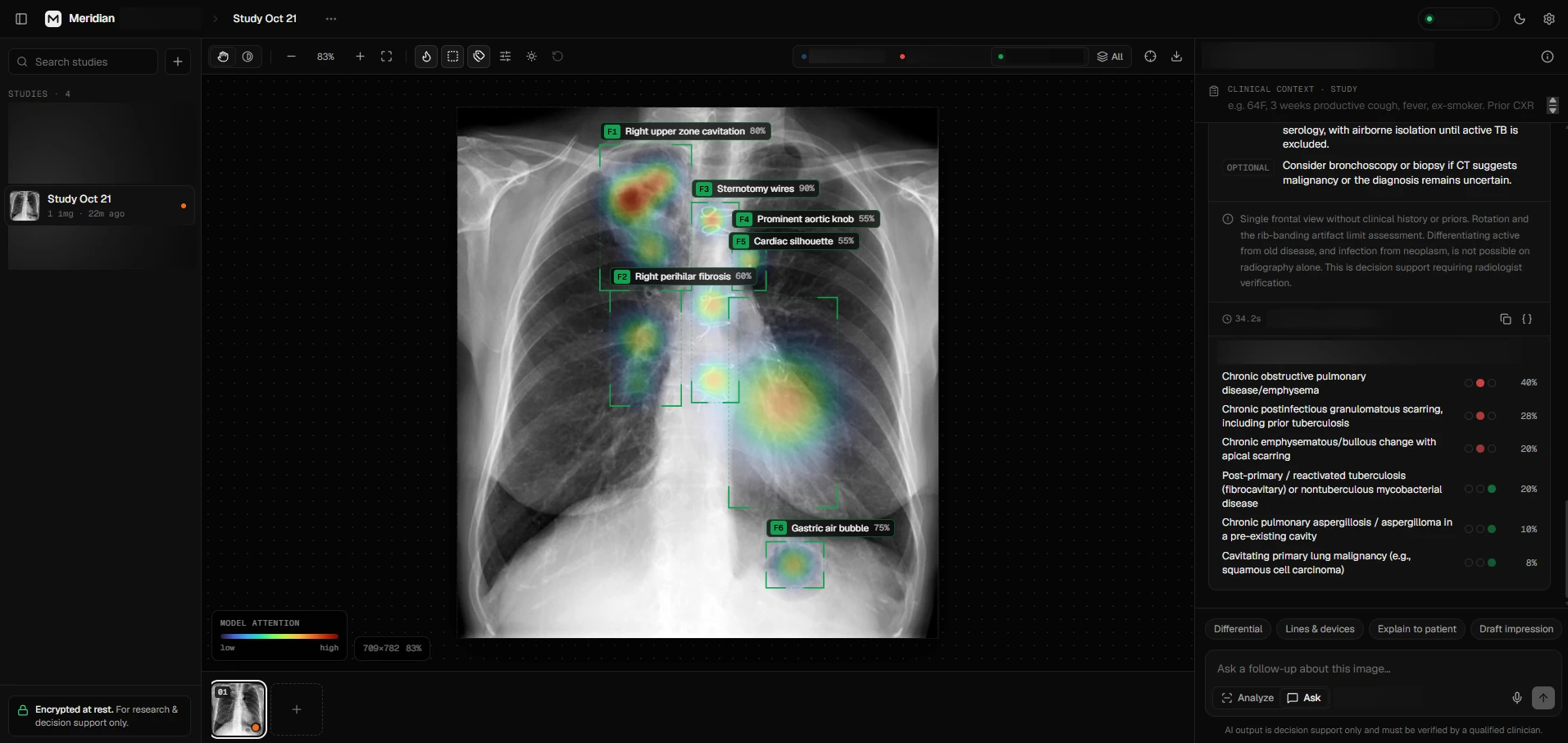
Meridian Imaging Assist is a working AI-assisted reading workspace. A clinician opens an image and asks for a read. Within moments the system returns a structured, report-style interpretation that the clinician can review, question and refine.
Meridian is built for decision support. It doesn’t make diagnoses. It gives a qualified reader a well-organized starting point, and the reader makes the final call.
How it works for the clinician
- Bring in a study. The clinician uploads a standard image or a DICOM file. Identifying patient information is stripped before anything is analyzed, so the system works only with the image and basic acquisition details.
- Ask for a read, or ask a question. The clinician can ask for a full read, or ask something specific: Is there anything critical here? What’s the most likely differential? Are the lines and tubes in the right place?
- Review a structured interpretation. Meridian returns the same shape of report every time:
- Image quality: whether the study is diagnostic, limited or non-diagnostic, and why
- Findings: each one labeled, described, rated for severity and given an honest confidence level
- Differential diagnosis: ranked possibilities, with the evidence for and against each
- Recommendations: suggested next steps, marked by priority
- Critical alerts: findings that may need urgent communication are flagged prominently
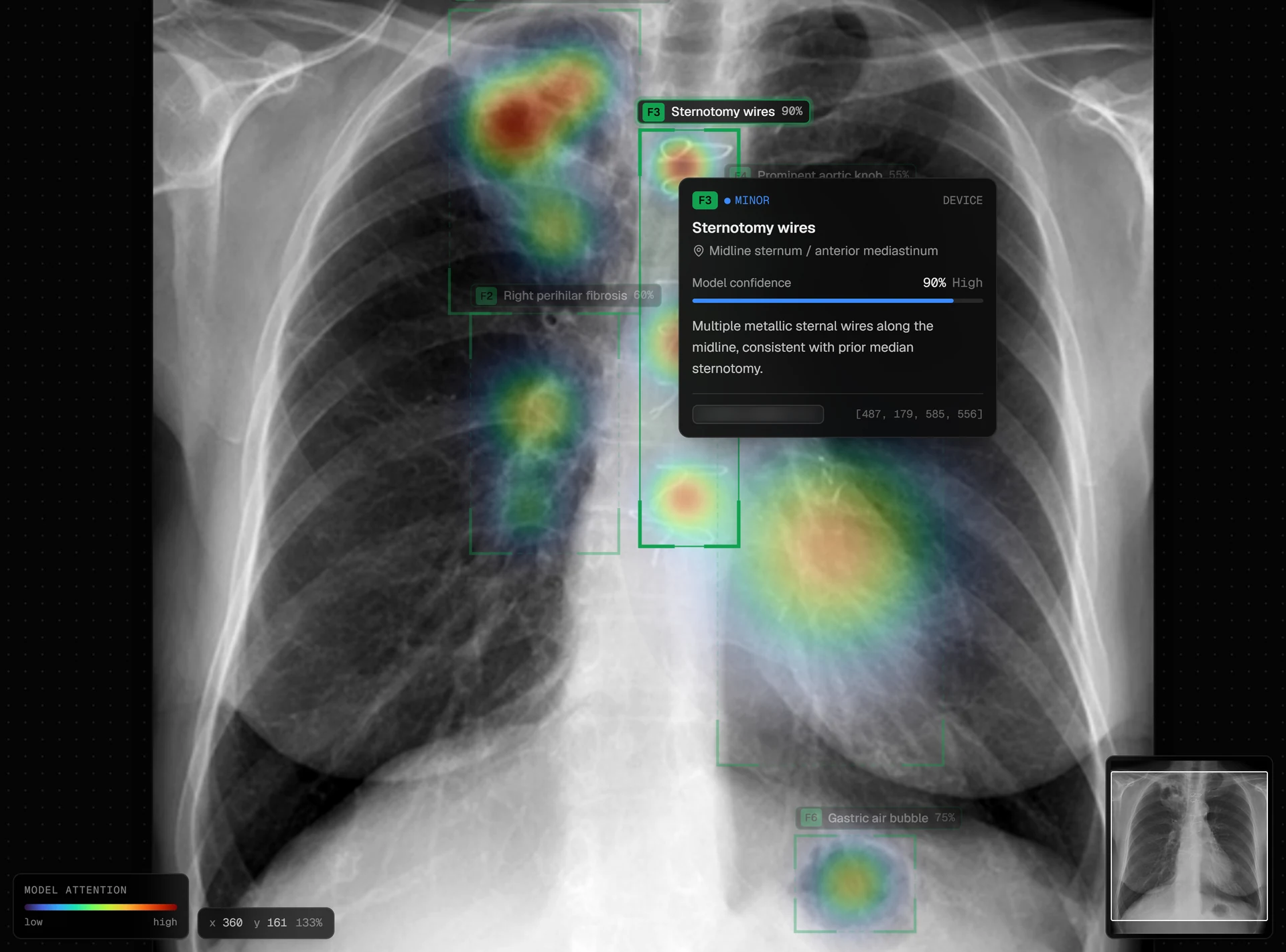
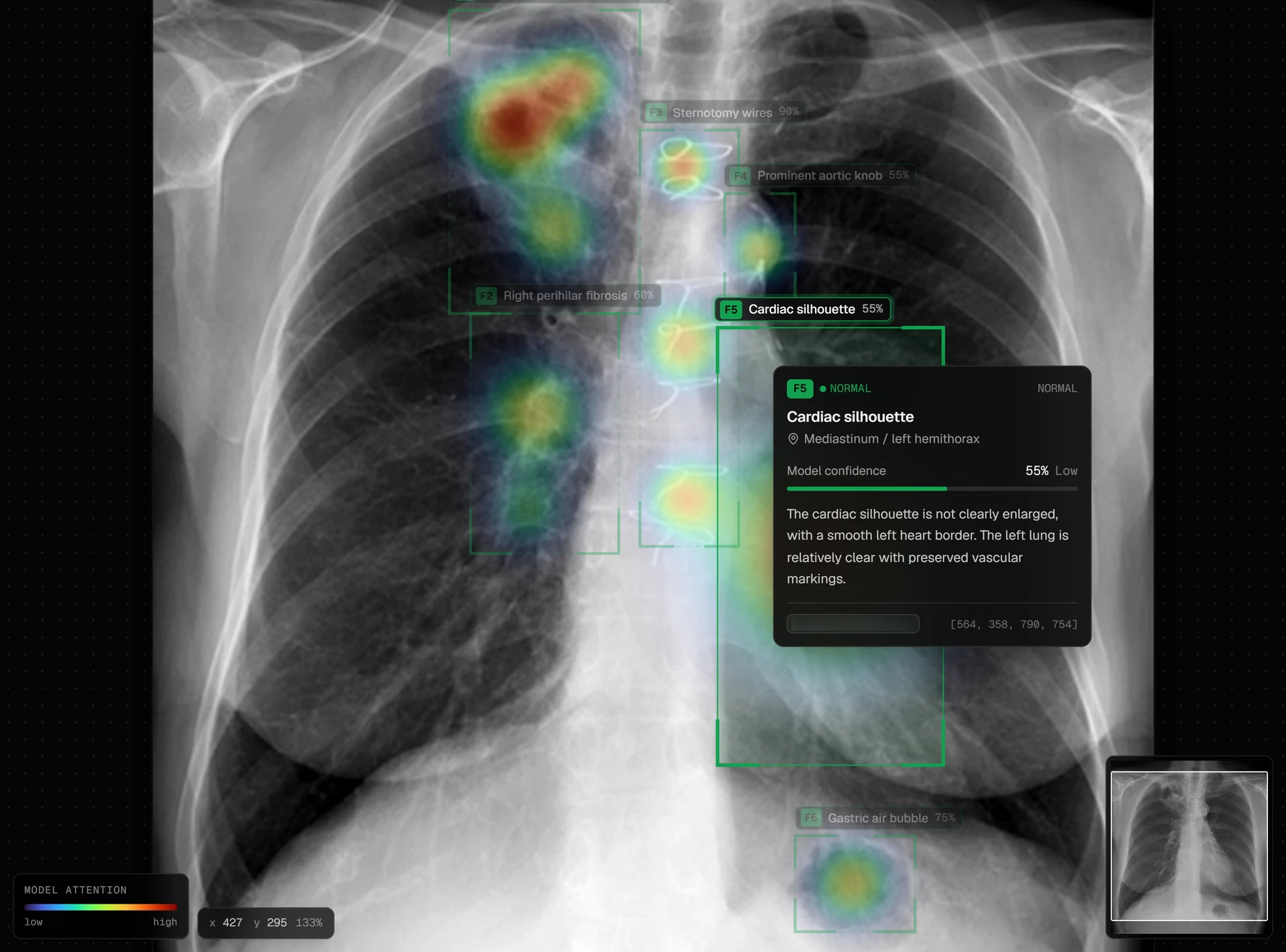
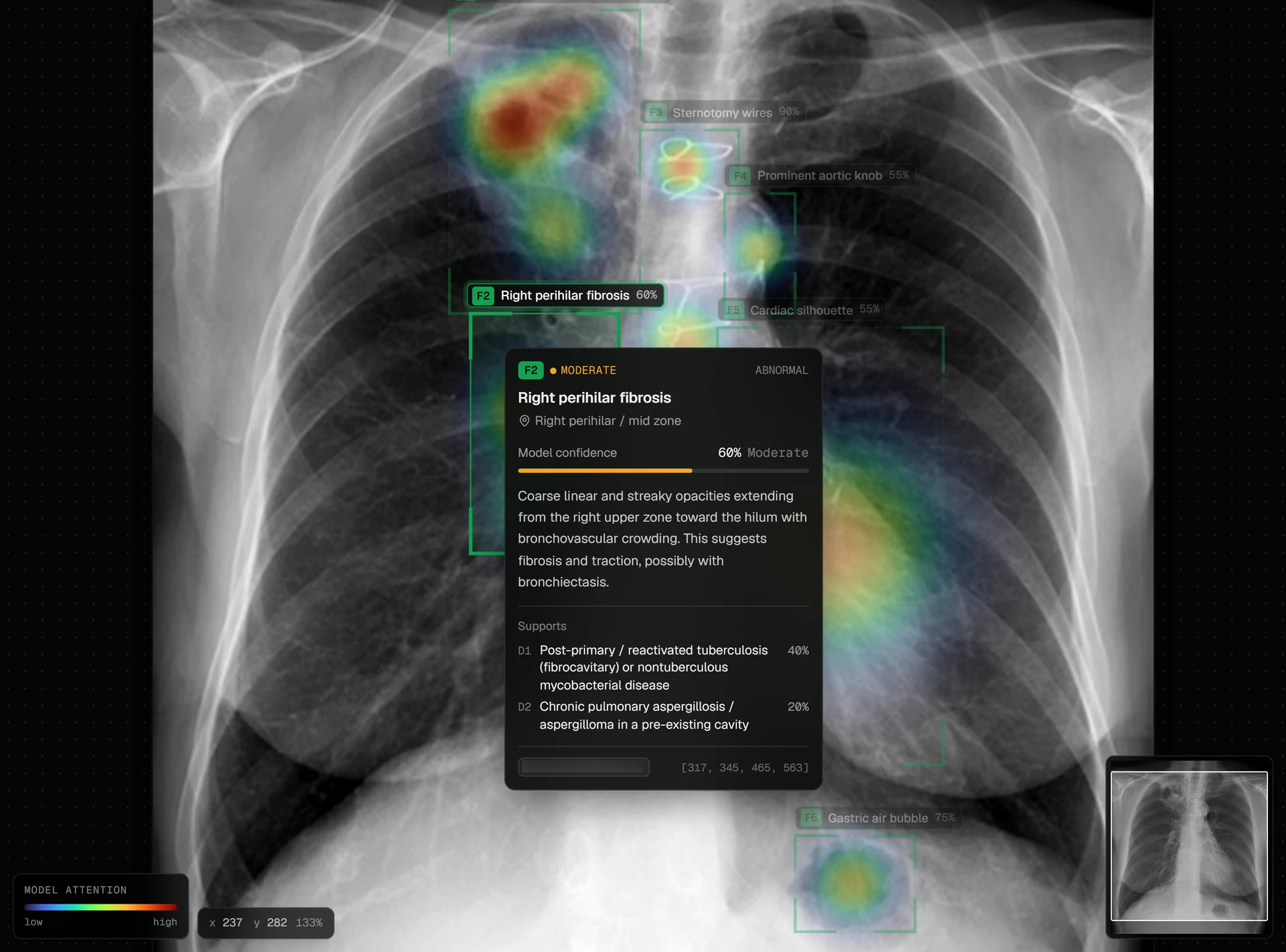
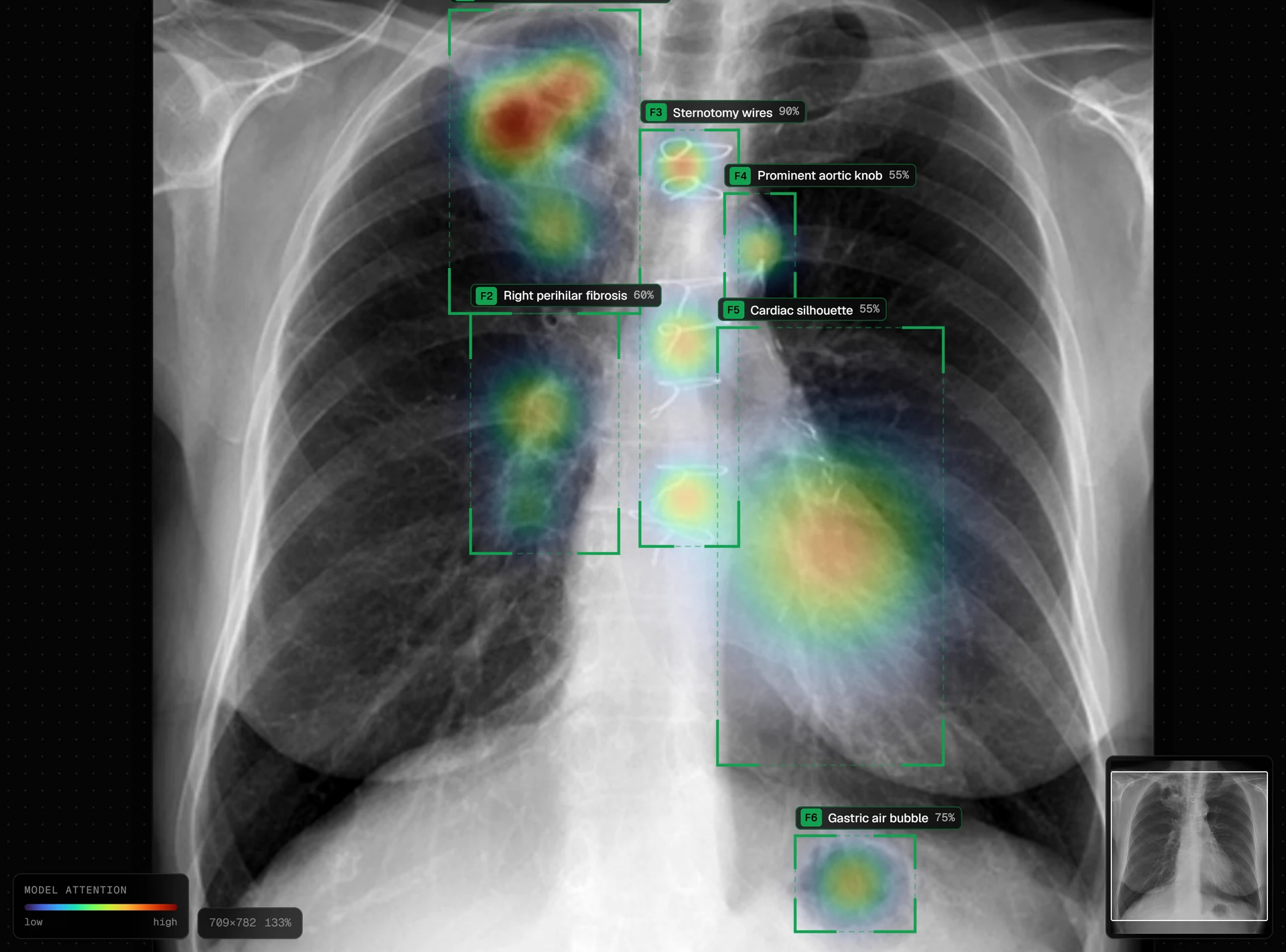
- See where the findings are. Findings are drawn directly on the image as highlighted regions and an attention overlay. Hover over a highlighted area and its details appear; click a finding in the report and the viewer jumps to it. This keeps the report and the image tied together.
- Compare independent opinions. The clinician can have several independent AI readers look at the same study and see where they agree. Agreement builds confidence. Disagreement shows where a closer look is worth the time.
- Keep the conversation going. After the read, the clinician can ask follow-up questions in plain language. The system can draft an impression for the final report or explain the findings in plain language for a patient.
Built with clinicians in mind
- Familiar viewing tools. Pan, zoom, window and level, invert, and a one-click reset all work the way readers expect.
- Fast to use. Keyboard shortcuts, dictation and preset questions keep hands-on time low.
- Honest about uncertainty. Confidence levels are presented plainly. Every result carries a clear reminder that AI output must be verified by a qualified clinician.
- Privacy first. Patient-identifying details are removed at the start, and studies stay in the organization’s own environment.
The value
| For | What Meridian offers |
|---|---|
| Radiologists | A consistent second read on every study, with findings shown on the image, which helps catch what fatigue can miss |
| Clinical teams | Faster, clearer communication of critical findings and next steps |
| Departments | Help with growing volumes without lowering the standard of review |
| Patients | Plain-language explanations that help them understand their results |
Above all, Meridian aims to make careful review easier to sustain. It puts the clinician’s attention where it matters and leaves the judgment with the clinician.
Where it stands
Meridian is a working product that demonstrates what an AI-assisted reading workflow can look like from start to finish: upload, structured read, image overlays, comparison and follow-up conversation. It shows that this kind of tool is practical to build and pleasant to use. It also shows how AI can support clinical expertise without replacing it.
Meridian is not a medical device and has not been clinically validated. Any clinical use would require appropriate validation, regulatory review and integration with existing systems.